Calm Home Design Starts by Removing More
The new dream home does not always begin with a shopping cart, a renovation budget, or another mood board saved at midnight. Increasingly, it begins with a quieter question: what can leave? In a world where every corner of daily life is trying to sell us a new upgrade, calm home design feels refreshing because it flips the script and treats space, silence, and breathing room as the real luxury. The idea behind “Calm Homes Are Now Built by Removing More” is not about making rooms empty or cold, but about noticing how much emotional noise we accidentally store in our spaces. When a home has fewer visual interruptions, fewer forgotten objects, and fewer design choices competing for attention, everyday life starts to feel less like background stress and more like a place you can actually land.
Why Calm Home Design Is Becoming the New Luxury
For years, home inspiration was built around addition: add a new accent chair, add a gallery wall, add another storage basket, add a statement lamp, add one more “must-have” piece to finish the room. That mindset made sense in a culture that treated personality as something you could display through objects, but it also created homes that looked layered while feeling mentally crowded. Now, the mood is shifting toward calm home design, where the most powerful move is often editing rather than decorating. People want rooms that help them decompress after long screens, loud commutes, unstable routines, and nonstop digital input. The home is no longer just a backdrop for taste; it is becoming a nervous-system support system, and that changes what good design is supposed to do.
This does not mean everyone suddenly wants a white room with one ceramic vase and no personality. The more interesting shift is that people want interiors that feel intentional instead of overfilled, lived-in instead of staged, and soothing instead of showroom perfect. A calm home can still include books, heirlooms, color, art, plants, texture, and souvenirs, but each element needs enough space to breathe. When everything is displayed at once, even meaningful objects can lose their emotional value because the eye never gets a place to rest. The real appeal of calm living is not minimalism as an aesthetic, but clarity as a daily feeling.
There is also a practical reason this trend feels so current: people are tired of being told that every problem has a product solution. If your living room feels stressful, the answer might not be a new sofa, a sculptural lamp, or a trendy side table. It might be the pile beside the doorway, the tangled cords under the desk, the harsh overhead light, the storage unit that is quietly overflowing, or the decor that no longer matches the life you actually live. Better everyday spaces are often built by removing friction before adding beauty. Once the visual noise goes down, the design that remains can finally speak clearly.
The Psychology of Removing More
A home is never just a collection of furniture and objects; it is also a map of attention. Every item in a room asks the brain to process something, even if the request is tiny and almost invisible. A stack of unopened mail says “deal with me,” an overcrowded shelf says “sort me,” a chair covered in clothes says “finish this later,” and a drawer that will barely close says “you are behind.” Over time, those small signals can turn the home into a place that looks normal but feels mentally unfinished. This is why decluttering for calm is less about being tidy and more about reducing the number of decisions your brain has to hold in the background.
Removing more also changes how the body experiences a room. When pathways are clear, mornings feel smoother because movement is not constantly interrupted by obstacles. When surfaces are calmer, cleaning becomes less of a dramatic weekend reset and more of a simple maintenance rhythm. When storage is not packed to the edge, putting something away becomes easy enough to actually happen. These tiny improvements matter because peace at home is usually not created by one huge transformation, but by dozens of small moments that stop draining energy.
The emotional side is just as important. Many homes hold old identities: the hobby you thought you would pursue, the decor from a previous era of taste, the gifts you kept out of guilt, the clothes that belong to a version of you that no longer exists. Removing these things can feel surprisingly personal because objects often carry stories, expectations, and unfinished decisions. Still, letting go can create a softer kind of honesty in the home. Instead of being a museum of every past intention, the space becomes a reflection of who you are now and how you want to feel next.
Calm Home Design Begins With What You Stop Keeping
The first stage of calm home design is not buying hidden storage or reorganizing everything into prettier containers. It is learning to notice what is creating noise, friction, or emotional heaviness in the first place. Some items are obviously unnecessary, like broken accessories, duplicate kitchen tools, expired products, and cables that no one can identify. Others are harder to name because they are technically useful, visually acceptable, or attached to a memory. The goal is not to remove everything, but to stop giving permanent space to things that no longer support your daily life.
A helpful place to start is with the objects that create repeated irritation. Maybe there is a side table that always collects clutter because it sits in the wrong spot, or a decorative tray that looks stylish but makes the counter harder to use. Maybe the entryway has too many shoes, the bedroom has too many surfaces, or the kitchen has appliances that promise convenience but mostly steal space. Calm does not come from forcing yourself to live with awkward design because it looks good in theory. It comes from building a home that cooperates with your real habits instead of constantly correcting them.
This is where the idea of removal becomes more creative than it first sounds. Taking away a bulky chair can make a small living room feel twice as generous, even if nothing new is added. Clearing a bedroom dresser can make the morning feel calmer before the day has even begun. Removing one loud color, one oversized rug, or one unnecessary storage unit can shift the entire atmosphere of a room. In many homes, the “missing piece” is not another piece at all, but the space that appears after something unnecessary leaves.
The Difference Between Empty and Calm
One reason people resist editing their homes is the fear that calm will look empty, bland, or overly controlled. That fear is fair, especially because a lot of online minimalism has been presented as spotless rooms with no visible humanity. But true calm is not the same as emptiness, and a peaceful home should still feel warm, layered, and alive. The difference is that calm spaces use fewer elements with more intention, while empty spaces simply lack personality. A room can have a patterned cushion, a stack of books, a textured throw, a plant, a favorite bowl, and still feel calm if those things are chosen with care.
The secret is giving each object a reason to exist in the room. That reason can be functional, emotional, sensory, or beautiful, but it should not be pure default. When an object is there only because it has always been there, the room starts to collect passive decisions. When each piece earns its place, even a modest space can feel deeply personal. This is why calm interiors often feel more intimate than heavily decorated ones, because the fewer things left behind tend to be the ones that matter most.
The Rise of Slow Living Interiors
The bigger cultural movement behind this shift is slow living interiors, a way of designing that values rhythm, comfort, and emotional sustainability over constant refresh cycles. Slow living does not ask people to reject modern life or pretend they live in a countryside cottage with endless free time. Instead, it asks the home to create small pockets of steadiness inside a fast life. A slow living room might invite longer conversations, a calmer bedroom might protect sleep, and a more intentional kitchen might make ordinary meals feel less rushed. These are not dramatic luxuries, but they can change the emotional texture of a normal week.
Removing more fits naturally into this philosophy because clutter often represents speed. We buy quickly, accept quickly, store quickly, and postpone decisions quickly, until the home becomes full of things we never properly chose. Slow living asks for a pause before the next purchase and a second look at what is already there. It encourages repair before replacement, appreciation before upgrading, and space before accumulation. In that sense, a calmer home is not anti-style; it is anti-noise.
There is also a sustainability layer that makes this trend feel more meaningful than a passing aesthetic. Buying less, keeping better, and removing responsibly all push against the cycle of disposable decor. A home that is edited with care tends to rely more on durable materials, timeless forms, natural textures, and flexible pieces that can move between rooms over time. This kind of design ages better because it is not built around chasing every microtrend. The result is a home that feels current without needing to be constantly replaced.
How Visual Noise Changes the Mood of a Room
Visual noise is one of the most underrated reasons a home can feel exhausting. It is not always mess in the obvious sense; sometimes it is too many colors, too many shapes, too many open shelves, too many labels, too many small objects, or too many competing focal points. A room can be clean and still feel loud if the eye has nowhere to settle. This is especially true in compact homes, where every surface carries more visual weight. When the brain keeps scanning a room without finding a calm pause, the space can feel restless even if the layout is technically functional.
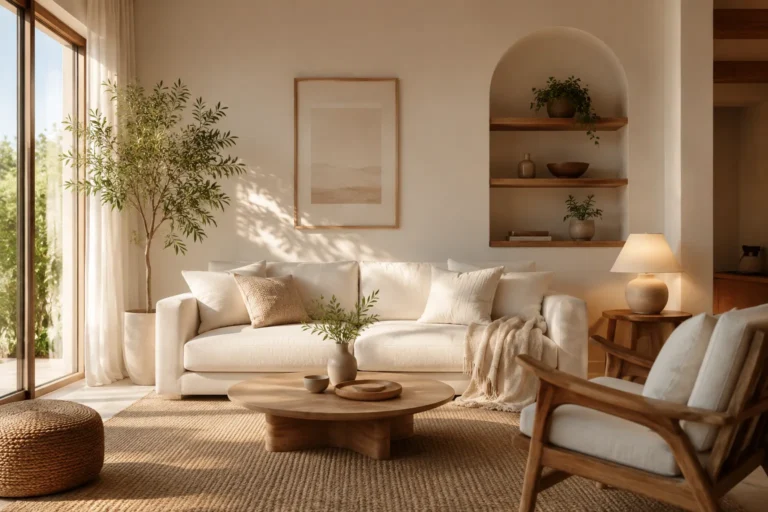
Reducing visual noise begins with choosing what deserves attention. In a living room, that might mean allowing the sofa, one piece of art, and warm lighting to lead the atmosphere instead of forcing every corner to perform. In a bedroom, it might mean removing bright packaging, extra cushions, visible laundry baskets, or too many bedside objects. In a kitchen, it might mean clearing the counter so cooking feels like an invitation rather than a negotiation. These edits sound simple, but they can change how the entire home feels because they lower the number of things asking for your attention at once.
Color also plays a quiet but powerful role. Calm interiors do not need to be beige, but they usually need some kind of visual relationship between materials and tones. A room with five unrelated accent colors, high-contrast objects, glossy finishes, and scattered patterns may feel energetic in a photo but draining in daily life. On the other hand, rooms built around earthy neutrals, muted color families, soft contrast, and natural texture tend to feel easier on the eye. The point is not to follow one palette forever, but to make the room feel like a conversation instead of an argument.
Why Surfaces Matter More Than People Think
Surfaces are the emotional weather of a home. A cluttered table can make the whole dining area feel unavailable, even if the chairs are comfortable and the lighting is beautiful. A crowded nightstand can make sleep feel less protected because the last thing you see at night is unfinished business. A kitchen counter covered in appliances, containers, and random objects can make cooking feel harder before any food is touched. When surfaces are calm, the home gives back a sense of readiness.
This does not mean every surface must be bare. A single lamp, a ceramic dish, a candle, a book, or a vase can make a surface feel warm and human. The issue is not objects themselves, but the difference between intentional presence and accidental accumulation. A surface works best when it has a clear purpose and a little negative space around the things placed there. That negative space is not wasted; it is what allows the room to feel composed.
Removing More Without Losing Personality
The strongest calm homes are not personality-free; they are personality-edited. They keep the books that are actually read, the art that still sparks something, the textiles that feel good against the skin, and the objects that tell a story without overwhelming the room. This matters because people often confuse decluttering with erasing themselves, when the opposite can be true. By removing the filler, the meaningful pieces become easier to see. A treasured wooden chair, a handmade bowl, or a framed print can feel more expressive when it is not surrounded by visual static.
One practical way to protect personality is to create zones of expression rather than spreading everything everywhere. A shelf can hold collected ceramics, but every shelf does not need to become a display. A hallway can carry family photos, but every wall does not need to become a memory board. A reading corner can feel rich with books and texture, while the bedroom stays more visually restful. This approach allows the home to feel layered without becoming overstimulating.
Texture is another way to keep warmth after removing excess. Natural wood, linen, wool, clay, stone, woven fibers, aged metal, and soft rugs can make a calm room feel tactile and grounded. These materials do not need to shout because they create depth through touch, shadow, and subtle imperfection. A simple room with rich texture often feels more luxurious than a crowded room filled with trend pieces. That is why mindful home decor is less about having less for the sake of less, and more about choosing materials that make everyday life feel better.
The New Everyday Reset: Small Edits, Big Relief
A calm home is not created in one dramatic weekend where everything is pulled out, judged, and reorganized under pressure. For most people, that approach feels intense and unsustainable, especially when life is already busy. The better method is a slow edit that respects energy levels and focuses on high-impact zones first. Start with the area that greets you when you come home, because that first visual impression can set the tone for the evening. If the entryway feels lighter, the whole home often starts to feel more welcoming before any major design decision is made.
After the entryway, bedrooms are worth special attention because they should be the most protective rooms in the home. Removing excess decor, work materials, old laundry piles, unused furniture, and harsh lighting can make the bedroom feel less like a storage zone and more like a recovery space. This is especially important in homes where the bedroom has become an office, wardrobe overflow, charging station, and emotional catch-all. Even small edits can help the room return to its main job: supporting rest. When sleep spaces are calmer, the entire rhythm of the day can feel more manageable.
Kitchens also respond quickly to removal. A kitchen does not need to be huge to feel good, but it does need enough open space to prepare food without constant rearranging. Removing duplicate tools, unused gadgets, decorative clutter, and expired pantry items can make the room feel instantly more functional. The change is not only visual; it reduces the friction between wanting to cook and actually cooking. A calmer kitchen makes simple meals feel easier, which is one of the most underrated forms of everyday wellness.
The Five-Minute Removal Practice
One gentle way to build momentum is to practice five-minute removal instead of waiting for a full decluttering day. Choose one drawer, one shelf, one countertop, or one corner, then remove only what is obvious. The goal is not to make a perfect decision about every sentimental object or redesign the whole room in one attempt. It is simply to teach the home to release small amounts of noise regularly. Over time, those short edits create a visible difference without turning calm living into another exhausting project.
- Remove items that are broken, expired, duplicated, or no longer used.
- Clear one surface that affects your morning or evening routine.
- Move visual clutter behind closed storage when it truly needs to stay.
- Keep one meaningful object visible instead of five competing pieces.
This kind of practice works because it focuses on relief rather than perfection. The home becomes calmer through repeated small choices, not through a single dramatic identity shift. It also helps you understand which removals actually improve your life, because you can feel the difference in real time. Maybe clearing the dining table makes meals more relaxed, or maybe editing the bathroom shelf makes mornings feel less chaotic. When the result is felt, not just seen, the habit becomes much easier to continue.
How Calm Spaces Support Wellness at Home
Wellness at home used to be marketed through obvious upgrades: spa-style bathrooms, meditation rooms, air purifiers, organic bedding, and scented candles. Those things can be lovely, but the deeper conversation is moving toward how the entire home affects daily stress. A room with bad lighting, cluttered surfaces, poor flow, and no quiet corner can undermine calm no matter how many wellness products are added. This is why home wellness ideas now need to include editing, maintenance, sensory comfort, and emotional ease. A truly supportive home reduces stress before it tries to decorate over it.
Lighting is one of the easiest examples. Removing a harsh overhead habit and replacing it with layered lamps can completely change the evening mood. Even before buying anything new, a person can remove visual glare by switching off unnecessary lights, relocating a lamp, or opening curtains in a more intentional way during the day. Sound matters too, because cluttered rooms with hard surfaces often feel sharper and louder. Adding softness can help, but removing unnecessary hard, rattling, or unused pieces can make the acoustic feel of a room more restful.
Scent and air quality also connect to the idea of removing more. A calm home is not helped by a dozen competing fragrances, dusty textiles, forgotten cleaning products, or cabinets full of things that leak, expire, or irritate. Simplifying what enters the home can make the environment feel fresher and easier to maintain. Even plants, while beautiful, should be cared for intentionally rather than collected until they become another source of stress. Wellness design works best when it supports real routines instead of creating new obligations that quietly pile up.
Better Everyday Spaces Are Designed Around Real Life
The most calming homes are honest about the people who live in them. They do not copy an online aesthetic without asking whether the layout works, whether the storage makes sense, or whether the daily routine feels supported. A family home, a solo apartment, a shared rental, and a compact studio will all need different kinds of removal. In one space, calm might mean fewer toys in the main room at night; in another, it might mean clearing a desk that doubles as a dining table. Good design begins when the home stops pretending and starts responding.
This is especially important for small homes, where every item has a stronger impact. In a small living space, one unnecessary chair can block movement, one oversized coffee table can make the room feel cramped, and one open shelf full of random objects can dominate the visual field. Removing more can create a sense of expansion without changing the square footage. The best small-space calm comes from giving every object a clear role and every pathway a little dignity. When a compact home has breathing room, it can feel intentional rather than limited.
For larger homes, the challenge is different. More space can invite more accumulation because empty corners feel like problems to solve. Over time, rooms can become filled simply because there was room to fill them, not because the additions improved daily life. A calm larger home often requires restraint, because spaciousness is part of the luxury. Leaving a corner open, a wall quiet, or a table uncluttered can feel more elegant than rushing to complete every inch.
The Trend Impact: From Decor Flex to Emotional Function
The rise of calm home design reveals a bigger shift in how people define status at home. Instead of showing success through constant newness, people are starting to value homes that feel grounded, personal, and easy to live in. The most admired spaces are not always the most expensive or visually dramatic; they are the ones that seem to hold real life gracefully. A quiet room with good light, open surfaces, meaningful objects, and comfortable materials can feel more desirable than a heavily styled space that photographs well but functions poorly. This marks a move from decor as performance to design as emotional function.
Social media also plays an interesting role in this trend. On one hand, it fuels endless consumption by making every room look like it needs a seasonal update. On the other hand, people are becoming more aware of how exhausting that cycle feels. The clean reset video, the slow morning kitchen, the softened bedroom, and the edited shelf all perform well because they offer a visual exhale. Even online, where more usually wins, the image of less is starting to feel magnetic.
Still, the best version of this trend will not be about copying another aesthetic of emptiness. If calm becomes just another look to purchase, it loses its deeper value. The real opportunity is to use the trend as permission to pause, reassess, and build a home that feels easier to inhabit. That may look warm and rustic for one person, soft and modern for another, colorful but edited for someone else, or deeply minimal for someone who genuinely enjoys that mood. Calm is not one style; it is a relationship between space and nervous system.
How to Know What Should Stay
After all this talk about removal, the more important question might be what deserves to remain. The best objects in a calm home usually pass at least one clear test: they are useful, beautiful, comforting, meaningful, or deeply connected to routine. A favorite mug can stay because it makes mornings better, while five unused mugs in the back of a cabinet may not need the same loyalty. A stack of books can stay if it reflects an active reading life, but forgotten piles that create guilt might need editing. A calm home is not built by rejecting possessions, but by respecting the difference between support and weight.
Objects that stay should also be easy to care for. If a piece requires constant adjustment, cleaning, moving, or emotional negotiation, it might not be as supportive as it seems. This is why the “easy to reset” test is so powerful. A room is calmer when it can return to order without a huge amount of effort. The goal is not to create a home that never gets messy, but one that can recover quickly because it is not carrying too much.
Sentimental items deserve a slower, kinder process. Not every memory needs to be displayed, and not every inherited object needs to shape your daily environment. Some pieces may belong in a memory box, some may be photographed, some may be passed on, and some may deserve a more honored place than they currently have. Editing sentimental objects is not about becoming cold; it is about making sure memory supports the present rather than crowding it. When handled thoughtfully, removal can actually make the most meaningful objects feel more loved.
Conclusion: Calm Is the Space That Finally Returns
Calm homes are now built by removing more because people are beginning to understand that peace is not something you can simply add on top of overload. A room filled with too many objects, too many colors, too many obligations, and too many unfinished decisions will struggle to feel restful no matter how stylish it looks. The new luxury is not emptiness, but enoughness: enough beauty, enough function, enough texture, enough memory, and enough open space to breathe. That is why calm home design feels so relevant right now, especially for anyone trying to make daily life feel softer without chasing another expensive transformation. When the unnecessary leaves, the home does not become less alive; it becomes more available.
In the end, removing more is not a rejection of design, comfort, or personality. It is a way of making room for the parts of home that actually matter: rest, connection, focus, movement, ritual, and quiet pleasure. The calmest spaces are rarely the ones that try the hardest to impress, because their strength comes from how they feel when no one is watching. They allow mornings to begin with less friction, evenings to settle with less noise, and ordinary routines to feel more human. A better everyday space is not always built by adding the next beautiful thing; sometimes, it begins the moment you let the wrong thing go.