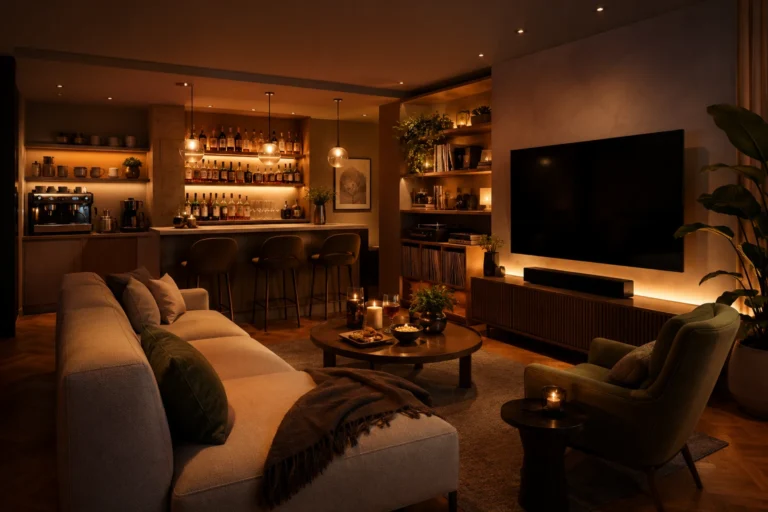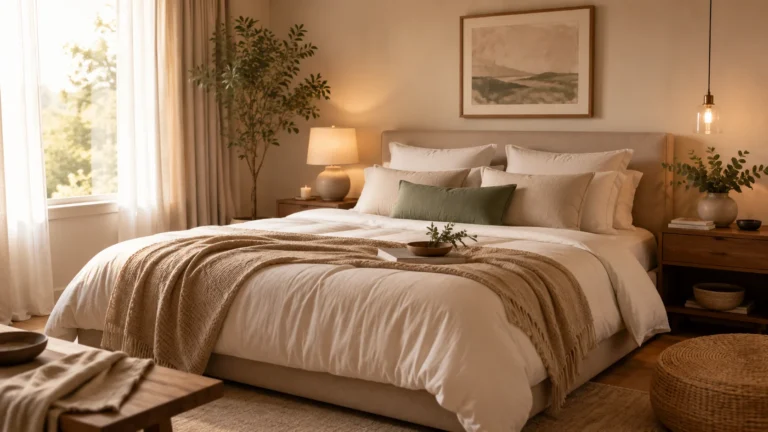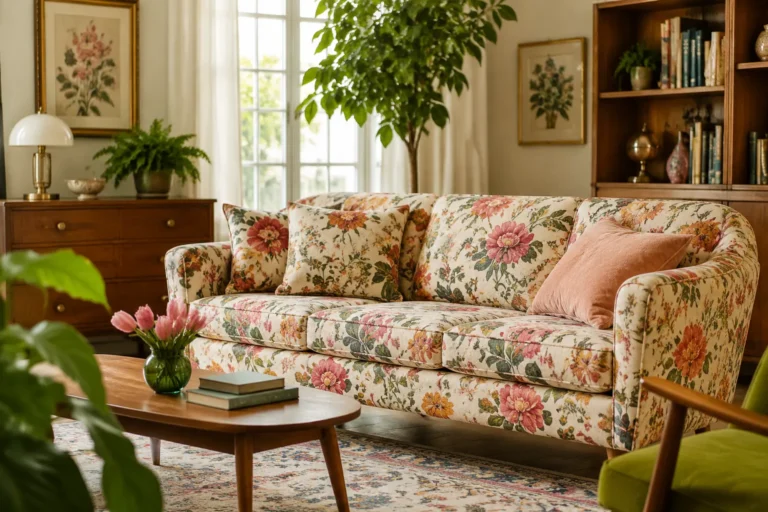
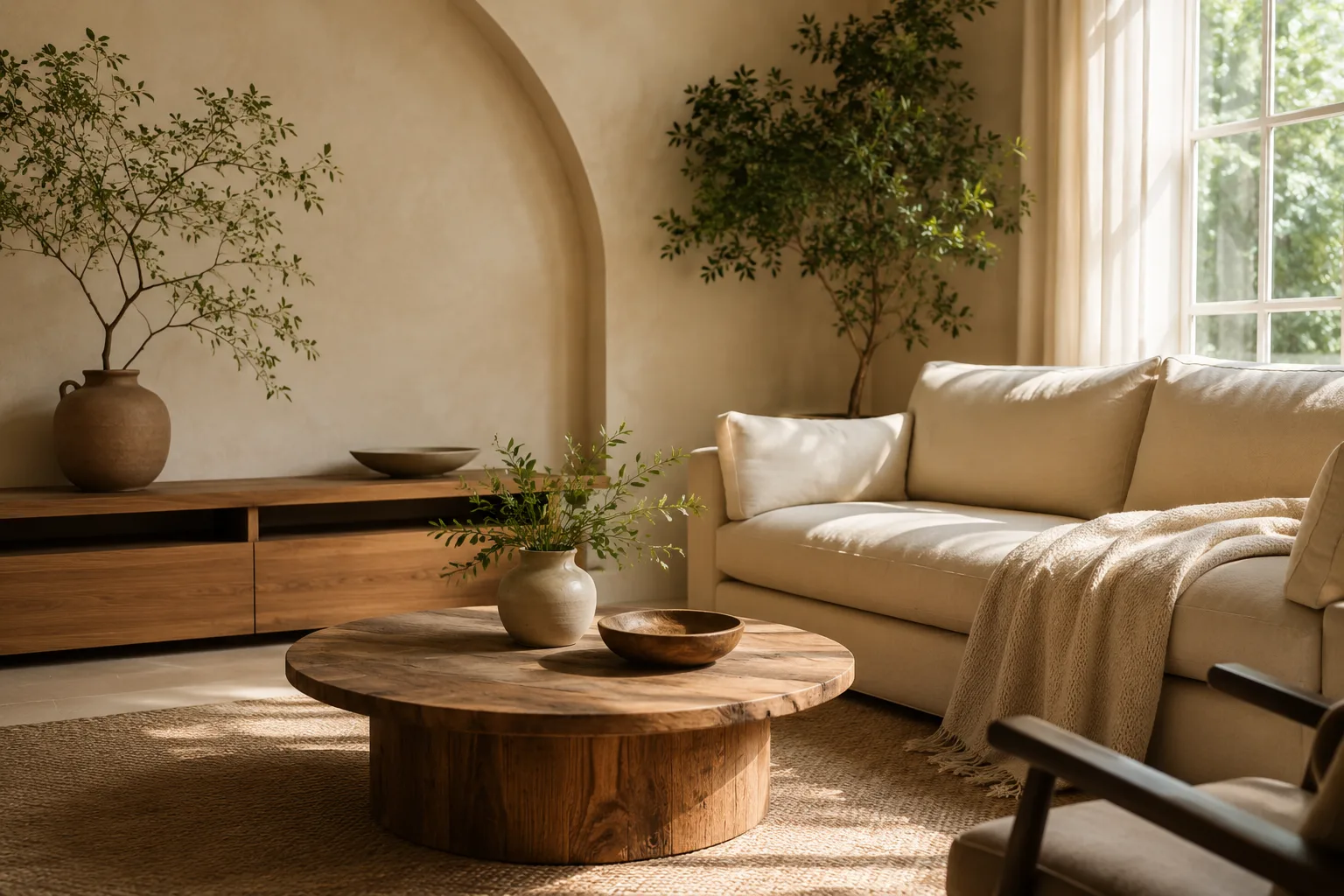
House Hushing Makes a Calmer Home Feel Possible
The first time a home feels too loud, it usually does not make an actual sound. It happens in the corner where mail keeps multiplying, on the shelf where decorative objects fight for attention, or in the living room that somehow feels busy even after it has been cleaned. That is why House Hushing has started to hit differently for people who are tired of homes that look finished but feel overstimulating. Instead of asking you to throw everything away or become a minimalist overnight, this quiet decluttering method invites you to pause, remove the visual noise, and let the room breathe before deciding what deserves to come back. In a culture that keeps telling us to buy one more basket, one more candle, one more “must-have” home object, House Hushing feels like a softer rebellion against the pressure to fill every empty space.
At its core, the method is simple enough to understand in one sentence: take the nonessential items out of a room, live with the calm for a short while, and then return only what genuinely supports the way you want that room to feel. The beauty is not in complexity, because most people already have enough complicated systems waiting for them in their daily lives. What makes quiet decluttering feel fresh is the way it changes the question from “What should I get rid of?” to “What actually belongs here?” That small shift matters because it removes some of the guilt and panic that often come with decluttering. Instead of starting with loss, you start with space, and space can feel surprisingly generous.
Why House Hushing Feels Right for This Moment
Homes have become more than places to sleep, eat, and keep our things. For many people, they are offices, recovery zones, workout corners, creative studios, social spaces, and private shelters from a world that moves too fast. That means the emotional weight of a messy or visually crowded room can feel much heavier than it did years ago. A cluttered coffee table is no longer just a cluttered coffee table when it sits beside your laptop, your unfinished to-do list, and the half-drunk water glass from yesterday’s late-night scroll session. House Hushing arrives at the exact moment when people are not just craving prettier rooms, but calmer nervous systems.
The trend also connects with a broader shift in how people think about wellness at home. Wellness used to be marketed as something expensive, polished, and slightly out of reach, like infrared saunas, designer diffusers, or perfectly styled bathrooms with stone trays and eucalyptus hanging from the shower. Those things can be beautiful, but they are not the only way to build a better everyday space. A calmer home can begin with the small act of clearing a nightstand, reducing the number of objects on a console table, or letting a dining room exist without becoming a storage station. In that sense, home wellness becomes less about buying a lifestyle and more about editing the one you already have.
There is also something very Gen Z and millennial about the emotional honesty behind this trend. People are openly admitting that their spaces affect their mood, their focus, their sleep, and even their sense of identity. A room can look aesthetically pleasing on camera while still feeling exhausting to live in, especially when every surface has been styled for visual impact rather than daily peace. House Hushing gives people permission to step back from performance and ask whether a room supports them when nobody is watching. That question may sound small, but for anyone living inside a home shaped by online inspiration, impulse purchases, and constant comparison, it can feel quietly radical.
What House Hushing Actually Means
House Hushing is often described as a reverse form of decluttering because it does not begin with sorting piles into keep, donate, trash, and maybe categories. Instead, you temporarily remove nonessential items from a room and place them somewhere else, giving the room a period of visual silence. This might include extra pillows, decorative trays, stacks of books, random cables, unused baskets, duplicate candles, small accessories, paper clutter, or anything that is not truly needed for the room to function. After living with the emptier space for a day or two, you slowly bring back the pieces that add comfort, beauty, usefulness, or meaning. The method works because it lets your body experience calm before your mind starts negotiating with every object.
That experience is important because traditional decluttering often asks for too many decisions too quickly. One drawer can hold five years of receipts, sentimental notes, expired lip balm, batteries, tape, coins, and keys that may or may not open something important. Trying to decide the fate of every item in the moment can drain your energy before you even reach the second surface. Quiet home organization takes a more spacious route by separating the act of clearing from the act of choosing. You are not forced to decide everything immediately, which makes the whole process feel less like a punishment and more like an experiment.
Another reason the method feels approachable is that it respects emotional attachment without letting it control the entire room. People keep things for all kinds of reasons, and not every reason is logical. A chipped mug can feel like a memory, a stack of unread books can feel like ambition, and a decorative object from a past apartment can carry a whole chapter of life inside it. House Hushing does not mock those attachments or demand that everything sentimental disappear. It simply asks whether the item still belongs in that specific place, at this specific time, in the life you are living now.
The Difference Between Clean and Calm
A clean room is not always a calm room, and that distinction is where the method becomes powerful. You can vacuum, dust, wipe, and fold everything, yet still feel restless if every wall, shelf, and tabletop is competing for your attention. Visual noise does not have to be dirty to feel overwhelming. Sometimes it is simply too many colors, too many objects, too many unfinished tasks, or too many pieces that no longer match the emotional function of the space. House Hushing helps reveal that difference by stripping the room back enough for you to notice what your eyes and mind have been processing in the background.
This is especially true in rooms that are supposed to help us recover. Bedrooms, living rooms, reading corners, and home offices often collect emotional clutter because they hold the routines we repeat the most. A bedroom might be technically tidy but still feel tense if the nightstand is packed with products, chargers, books, receipts, and objects that remind you of everything unfinished. A living room might look stylish but feel restless if every surface is layered with decor that needs constant adjusting. When you hush a room, you give it a chance to return to its main purpose before asking it to carry more.
How to Try House Hushing Without Overthinking It
The easiest way to begin is to choose one small zone instead of attempting your entire home. A coffee table, nightstand, entryway console, kitchen counter, reading corner, or bathroom shelf can be enough for a first attempt. Remove everything that is not essential to the function of the space, clean the surface, and let it stay empty or nearly empty for at least a day. During that pause, pay attention to how the area feels when it is not asking for your attention every time you pass by. This is where home wellness ideas become practical rather than abstract, because the calm is something you can actually feel in your daily routine.
After the pause, start returning items slowly rather than putting everything back at once. Bring back the lamp if you need it, the book if you are truly reading it, the bowl if it helps collect keys, or the framed photo if it makes the space feel warm. Leave behind the objects that only returned out of habit, guilt, or the fear that empty space looks unfinished. This stage is where intentional home design becomes more personal than any trend forecast, because the room begins to reflect how you live rather than how you think it should look. The goal is not a blank space, but a room that feels edited, honest, and easier to inhabit.
It also helps to create a temporary holding area for the items you removed. This could be a box, spare table, basket, or corner of another room where things can wait without turning the process into chaos. The holding area matters because it gives your brain proof that the items are not gone forever, which can make the experiment feel less stressful. After a day or two, you may notice that some objects feel important while others have already lost their emotional grip. That quiet distance is one of the main reasons House Hushing can be easier than more aggressive decluttering styles.
Start Where Your Stress Starts
Every home has a stress point, and it is usually more obvious than we want to admit. It might be the entryway where shoes, bags, keys, and packages pile up before anyone has fully entered the house. It might be the kitchen counter that becomes a landing strip for mail, snacks, skincare, tech accessories, and random objects with no permanent home. It might be the desk where work, personal life, and digital fatigue all crash into the same square meter. Starting with that zone can create a quick emotional win because the space you notice most often becomes the first one to feel lighter.
However, starting with stress does not mean starting with the hardest room in the house. Garages, storage rooms, and overflowing closets can be too intense for a method that works best as a gentle reset. If a space contains years of postponed decisions, it may need a different strategy before it can be hushed effectively. House Hushing shines in lived-in rooms where visual clutter has slowly taken over surfaces, shelves, corners, and routines. Think of it as a way to restore the mood of a space, not as a complete solution for every storage problem you have ever avoided.
House Hushing and the Rise of Slow Living at Home
The connection between House Hushing and slow living is not accidental. Both ideas push back against the belief that more is always better, faster is always smarter, and fuller is always more impressive. Slow living at home does not require a cottage, linen wardrobe, handmade ceramics, or a perfectly sunlit kitchen. It begins when the space around you gives your attention somewhere soft to land. A hushed room creates that opening because it reduces the number of tiny visual demands competing for your mind.
In a slow living mindset, the home is not just a container for possessions but a partner in daily rhythm. The chair near the window becomes a place to read instead of a place to stack laundry. The kitchen counter becomes a surface for making breakfast instead of a museum of unopened packages and forgotten appliances. The bedroom becomes a space that helps you sleep rather than a physical reminder of everything you have not handled yet. Calm home design supports these shifts by making ordinary routines feel less rushed and more grounded.
There is also a sustainability angle hiding inside the method. When you remove items and live without them briefly, you become more aware of how many things entered your home without earning a lasting role. That awareness can slow down future buying because you start recognizing the difference between desire, trend pressure, and actual need. You may still buy beautiful objects, but you become more selective about whether they improve the mood and function of your home. In this way, House Hushing can quietly reshape consumption without turning the process into a lecture about minimalism.
Why Empty Space Can Feel Emotional
Empty space can make people uncomfortable because it interrupts the habit of filling every visible gap. Many of us have been taught that a finished room needs layers, styling, personality, and objects that prove taste. But when every space is filled, there is less room for the eye to rest and less room for life to unfold naturally. A hushed room may feel strange at first because it exposes how much we use objects to create a sense of security, identity, or control. Over time, that same emptiness can begin to feel less like absence and more like relief.
This emotional shift is one of the reasons the method feels different from simply tidying up. Tidying often restores things to their usual places, while hushing asks whether those usual places still make sense. It can reveal that a lamp belongs in another room, that a decorative tray is only collecting clutter, or that a shelf looks better with fewer objects than you expected. These discoveries are small, but they change how you relate to your home. Instead of being trapped by past decisions, you start treating each room as something alive enough to change with you.
The Design Impact of a Quieter Home
From a design perspective, House Hushing works because it improves contrast, proportion, and focus without requiring a full makeover. When too many objects sit in one area, even beautiful pieces can lose their impact. A sculptural vase looks stronger when it has breathing room, a framed photo feels more meaningful when it is not crowded by five unrelated objects, and a sofa can feel more inviting when it is not overloaded with pillows. The method teaches restraint in a way that feels lived-in rather than cold. It does not erase personality, but it gives personality enough space to be noticed.
A quieter room can also make existing materials and textures feel more intentional. Wood grain, soft textiles, natural light, wall color, and architectural details often become more visible when the room is not covered in excess. This is why people sometimes hush a space and suddenly feel like they renovated, even though they did not buy anything new. The room’s best qualities were already there, but they were buried under too much visual information. For readers exploring better everyday spaces, this is one of the most accessible design upgrades because it costs attention instead of money.
The method can also help people understand their real style. Online interiors can make it tempting to mix every trend at once, from vintage accents and warm minimalism to dopamine decor, cottage details, hotel-inspired bedding, and sculptural storage. The result can be a room that contains many good ideas but lacks a clear emotional direction. Hushing forces the room into a quieter state, which makes it easier to see which pieces still feel like you when everything else is removed. That clarity can be more valuable than another mood board because it comes from your actual life, not an algorithm.
Where House Hushing Works Best
The living room is one of the most satisfying places to try House Hushing because it usually carries the most visual performance. This is the space guests see, the place where families gather, and often the room most influenced by styling ideas from social media. Start by removing extra decor from shelves, coffee tables, side tables, media consoles, and window ledges. Keep the furniture, lighting, and true essentials in place, but give the smaller objects a temporary break. After a day, you may notice that the room feels more open, conversations feel easier, and the pieces you truly miss become obvious.
The bedroom is another strong candidate because it has a direct relationship with rest. Many bedrooms slowly become storage zones for laundry, skincare, unread books, packaging, work bags, and emotional leftovers from the week. When those items remain visible, the room can keep the mind active even when the body is ready to sleep. Hushing the bedroom means clearing nightstands, dressers, chairs, and floor corners so the space can return to its primary job. Once the room feels calmer, you can reintroduce only the objects that support sleep, comfort, and a gentle morning routine.
Home offices and work corners can benefit too, especially for people who feel mentally scattered before they even open their laptop. A desk covered in old notes, extra pens, tangled cords, mugs, documents, and decorative items can create a sense of unfinished business. By removing everything except the tools needed for focused work, you give your attention a cleaner starting point. This does not mean your workspace needs to become sterile or corporate. It simply means that the items around your work should help your focus rather than constantly reminding you of unrelated tasks.
The Mistakes That Make House Hushing Harder
The biggest mistake is treating House Hushing like a speed-cleaning challenge. If the goal becomes rushing through the room for a dramatic before-and-after moment, the method loses its reflective power. The pause is not a decorative gimmick; it is the part that allows your perception of the room to reset. Without that pause, you may end up putting everything back because the emptiness never had time to teach you anything. A quieter home is not created by moving fast, but by noticing what changes when you finally stop adding.
Another mistake is confusing hushing with hiding. Pushing objects into a closet, drawer, or spare room without eventually making decisions can create a delayed clutter problem. The method works best when the holding area is temporary and visible enough that you remember to revisit it. After the pause, every object deserves a clear next step, whether it returns to the room, moves to a better location, gets donated, gets recycled, or leaves because it no longer serves your life. Without that follow-through, the calm room may simply transfer stress to another part of the home.
It is also easy to become too strict and remove the warmth along with the clutter. A peaceful room does not have to be empty, beige, or stripped of personal history. The best version of quiet decluttering protects meaning while reducing excess. A favorite blanket, one expressive artwork, a stack of books you actually reach for, or a small object with emotional value can make a room feel deeply human. The point is not to erase the evidence of life, but to remove the items that distract from it.
Why This Trend Is More Than Another Cleaning Hack
What makes House Hushing more interesting than a regular cleaning hack is its relationship with attention. Modern life is full of pings, tabs, feeds, reminders, open loops, and micro-decisions that make the brain feel constantly pulled in different directions. When a home mirrors that chaos through crowded surfaces and visual clutter, there is no real place to recover from the noise. A hushed room creates a physical version of closing unnecessary tabs. It may not solve every stressor outside your door, but it can make the place inside your door feel less demanding.
The trend also reflects a growing desire for homes that support emotional regulation. People are becoming more aware that design is not only about what looks good in photos, but what helps them feel safe, steady, and present. Lighting, layout, color, texture, storage, and the amount of visible stuff all shape that emotional experience. House Hushing gives people a direct way to test those elements without hiring a designer or buying a new set of furniture. It turns the home into a living experiment where calm becomes the metric that matters most.
There is a cultural fatigue underneath this movement too. Many people are tired of constant optimization, tired of being told their homes need seasonal refreshes, tired of purchasing solutions that create new clutter, and tired of chasing interiors that look effortless but require constant maintenance. The promise of House Hushing is not that your home will become perfect. The promise is that your home can become quieter, clearer, and more aligned with the life you are actually trying to live. That is a much more sustainable kind of beauty.
Conclusion: Let the Room Speak Softer
House Hushing works because it understands something many home trends forget: peace is not always something you add. Sometimes peace appears when you remove the extra layers, pause before replacing them, and give yourself time to feel the difference. A calmer home does not need to be expensive, perfectly styled, or completely minimal to support your wellbeing. It only needs to become more intentional about what stays visible, what earns space, and what quietly gets in the way. When a room finally speaks softer, you may realize that the home you wanted was not hidden in a shopping cart, but waiting underneath the noise all along.