Bedroom Detox Ideas for Deeper Sleep at Home
The bedroom used to be the quietest room in the house, but somewhere along the way it became a charging station, a second office, a late-night cinema, a laundry holding zone, and a stress archive with pillows. That is why bedroom detox is becoming more than another home trend; it is a reset for the way people recover from overstimulated days. The idea is simple but surprisingly powerful: remove the visual, digital, and emotional noise that keeps the brain half-awake even when the lights are off. Instead of chasing a perfect showroom bedroom, the new goal is to build a room that helps the body understand that the day is done. In a culture that keeps asking people to stay online, productive, and reachable, the most underrated luxury may be a bedroom that lets you fully disappear into rest.
This shift feels especially relevant now because better sleep is no longer treated like a private wellness bonus reserved for people with expensive mattresses and silent houses. It has become part of everyday design thinking, right next to lighting, storage, color, texture, and how a room makes someone feel after a long day. A bedroom detox does not require ripping out walls or buying an entire new furniture set, which is why the idea travels so well across apartments, shared homes, compact bedrooms, and family spaces. It asks a more honest question: what in this room is quietly asking for my attention when I should be winding down? Once that question lands, the bedroom starts looking less like a place to decorate and more like a system for deeper sleep.
Why Bedroom Detox Is Becoming a Sleep Trend
The rise of bedroom detox makes sense because the modern bedroom has absorbed too many roles at once. For many people, the same room is where they answer work messages, scroll through social feeds, stream shows, store extra clothes, and try to sleep after all that mental movement. The problem is not that a bedroom must look empty to be restful, because personality still matters deeply in home design. The problem is that too many objects in the room send tiny signals that the mind should stay alert, solve something, remember something, or consume something. A true detox is not about minimalism for the sake of aesthetics; it is about editing the room until rest becomes the strongest message.
What makes this trend feel fresh is that it blends interior design with behavioral wellness in a way that feels practical rather than preachy. People are not just asking whether a bedroom looks beautiful in daylight; they are asking whether it helps them switch off at 11 p.m. after a chaotic day. That change matters because a beautiful bedroom can still fail if the lighting is harsh, the phone is glowing beside the pillow, the desk is facing the bed, and the floor is covered with tomorrow’s responsibilities. The new sleep-first approach looks at the room as a sensory environment, not just a mood board. When the bedroom is curated around calm, the entire night routine becomes less forced and more natural.
The Real Meaning of Bedroom Detox
A bedroom detox is often misunderstood as simply cleaning the room, but it goes deeper than decluttering. Cleaning removes dust, while detoxing removes triggers that make the brain feel busy, watched, rushed, or unfinished. It is the difference between putting items into neat piles and asking whether those items should be in the sleep zone at all. A stack of books can feel cozy if it supports an evening reading ritual, but a stack of unopened packages may create the low-level guilt of tasks waiting to be handled. The process is not about judging every object harshly; it is about noticing what helps the body soften and what keeps it braced.
In this sense, the bedroom becomes a kind of personal boundary. It tells the rest of the home, and maybe the rest of the world, that not every part of life gets access to the bed. Work can exist, entertainment can exist, and daily mess can exist, but they do not all need to sit within arm’s reach of the pillow. This is where the trend connects with home wellness, because wellness is not only about what people buy or consume. It is also about what they remove, what they refuse to carry into rest, and what they protect inside the most private room of the home.
Start With the Digital Noise Beside the Bed
The most obvious place to begin a bedroom detox is the nightstand, because that is where modern sleep often gets interrupted before it even starts. A phone next to the bed can feel harmless, especially when it doubles as an alarm, but it also keeps the outside world physically close to the body. Even when the screen is locked, the possibility of one more message or one more scroll can keep the mind slightly activated. Add smartwatches, tablets, earbuds, glowing chargers, and tangled cables, and the nightstand can start to feel more like a mini command center than a calming surface. Moving devices across the room, placing them outside the bedroom, or hiding them inside a drawer can create a surprisingly strong psychological shift.
The goal is not to pretend technology is evil, because most people need it for work, safety, family, and routine. The goal is to stop technology from being the last thing the eyes see and the first thing the hand reaches for. A basic analog alarm clock can feel almost rebellious now, not because it is nostalgic, but because it gives the phone one less excuse to sleep beside you. Charging devices in a hallway, living room, or closed cabinet adds friction in the best possible way. That small distance can turn bedtime from an open-ended scroll session into a clearer transition from online life to actual rest.
Create a Phone-Free Landing Zone
A phone-free landing zone works best when it is simple enough to repeat every night without feeling like a lifestyle performance. It can be a tray near the bedroom door, a small shelf outside the room, or a charging drawer in the living area. The point is to make the device feel parked, not abandoned, so the habit becomes sustainable instead of dramatic. People often fail at digital detox because they try to go from total access to total restriction overnight, which can feel unrealistic. A better approach is to create a gentle system that makes the sleep choice easier than the scroll choice.
This detail also changes the emotional atmosphere of the bedroom. Without the phone beside the pillow, the bed stops feeling like a place where the day can keep negotiating with you. There is less temptation to check one more headline, compare one more life, or mentally reopen a work thread that cannot be solved at midnight. The quiet may feel strange at first, especially for people who use scrolling as a way to decompress. But after a few nights, the absence of constant input can become the exact softness the room was missing.
Lighting Is the Mood Switch for Deeper Sleep
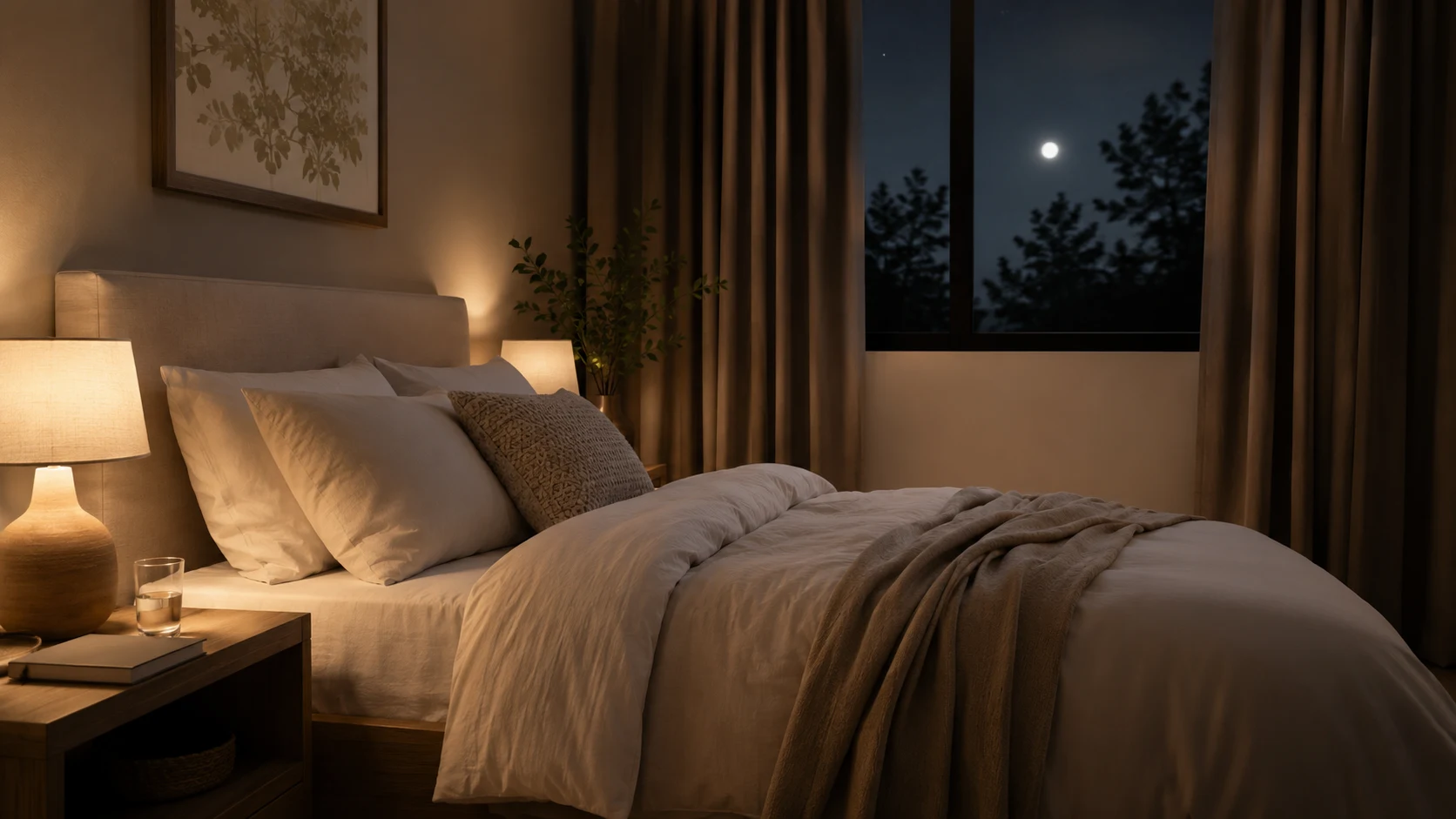
Lighting is one of the fastest ways to change how a bedroom feels, yet it is often treated as an afterthought. Bright overhead lighting may help with cleaning or getting dressed, but it can feel too sharp when the body is trying to move toward rest. A sleep-friendly bedroom usually benefits from layers: a softer bedside lamp, a warm reading light, shaded bulbs, and lighting that does not blast the room into full daytime mode at night. The important thing is not only how the room looks in a photo, but how it behaves during the final hour before sleep. A bedroom detox should ask whether the lighting helps the nervous system slow down or accidentally tells it to stay ready.
This is where people can make a major improvement without renovating anything. Swapping cold bulbs for warmer ones, adding lamps at lower heights, and avoiding bright task lights near bedtime can make the room feel more intimate. Curtains also matter because light pollution from windows can make the room feel visually restless even when everything else is tidy. Blackout curtains, heavier drapery, or layered window treatments can create a cocoon effect that supports deeper rest. The bedroom starts becoming less like a multipurpose room and more like a soft pause between one day and the next.
Color Should Calm, Not Perform
Color has become one of the most expressive parts of interior design, but the bedroom asks for a slightly different kind of confidence. A bold color can be beautiful, personal, and full of character, yet it may not always support sleep if it feels too visually loud at night. A bedroom detox does not demand beige walls or a personality-free palette, but it does encourage people to think about emotional temperature. Soft earth tones, muted greens, dusty blues, warm whites, clay shades, and gentle neutrals often work because they create depth without shouting. The best bedroom colors feel like a lowering volume, not a spotlight.
Still, the right palette depends on the person living in the room. Some people feel grounded by darker walls, while others need lighter tones to avoid feeling enclosed. Some love pattern and can relax inside it, while others need visual space before their minds can settle. This is why the most useful design question is not “What color is trending?” but “What color helps this room exhale?” When the answer comes from lived experience instead of a viral template, the room becomes more restful and more authentic at the same time.
The Hidden Stress of Bedroom Clutter
Clutter in a bedroom is not always messy in an obvious way. Sometimes it appears as decorative excess, too many pillows, open shelving full of tiny objects, or furniture that technically fits but leaves no breathing room. These details may look fine during the day but create a subtle sense of friction at night. The eye keeps landing on surfaces, shapes, labels, cords, baskets, and unfinished corners, and the brain keeps reading the room even when it wants to shut down. A strong bedroom detox edits those signals until the room feels easier to process.
The most effective decluttering strategy is to remove categories, not just random items. Work materials, exercise equipment, laundry piles, unopened mail, beauty products, extra devices, and storage overflow each carry a different emotional message. If all of them live near the bed, the room becomes a quiet meeting between every unfinished part of the day. Better storage helps, but the bigger win is deciding what the bedroom is allowed to hold. When the room holds fewer competing roles, sleep does not have to fight so hard for attention.
Edit the Nightstand Like a Ritual
The nightstand is small, but it can reveal the entire emotional state of a bedroom. A crowded nightstand often means the room is carrying anxiety, distraction, or too many backup plans. A calmer one might hold only a lamp, a book, water, a small dish, and one object that feels genuinely peaceful. That level of simplicity does not have to look sterile, because texture, wood, ceramic, linen, or a small plant can still make it feel warm. The goal is for the bedside surface to support a ritual, not become a storage unit for everything the day forgot to put away.
Once the nightstand is reset, the rest of the room often becomes easier to rethink. People begin noticing which objects are helping and which ones are just lingering because nobody questioned them. A chair covered with clothes may need a basket, a closet edit, or a new evening habit. A visible work bag may need to live by the door instead of near the bed. These small shifts matter because the bedroom becomes restful through repeated signals, not one dramatic makeover.
Bedroom Detox and the Slow Living Mindset
The bedroom detox trend fits naturally into slow living because both ideas push back against the pressure to optimize every waking second. Slow living is not about doing nothing, and it is definitely not about making a home look artificially rustic or staged. At its best, it is about creating rhythms that help people feel present in their own lives. In the bedroom, that means building an environment where the end of the day has a shape, a pace, and a sense of closure. The room becomes a reminder that rest is not a reward after everything is complete; it is a daily requirement that deserves design support.
This mindset can be seen in the return of analog rituals inside the bedroom. Reading a physical book, stretching on a rug, writing in a notebook, folding tomorrow’s clothes, or lowering the lights at the same time each evening can all become cues for sleep. None of these habits are new, which is part of their charm. They feel almost refreshingly ordinary in a world that keeps selling complicated solutions for basic human needs. A detoxed bedroom gives these rituals room to happen without competing against screens, clutter, or visual noise.
Texture Makes a Bedroom Feel Human Again
One risk of detoxing a bedroom is taking the idea too far and ending up with a room that feels cold, empty, or emotionally flat. That is where texture becomes essential. Linen bedding, wool throws, soft rugs, upholstered headboards, wooden furniture, woven baskets, and matte ceramics can make a simplified room feel layered rather than bare. A calming bedroom design should give the senses something gentle to land on, especially after a day spent staring at hard screens and bright interfaces. Texture adds comfort without demanding too much attention.
This is also why hotel-like minimalism is slowly giving way to more personal, lived-in bedrooms. People still want calm, but they do not necessarily want a space that feels anonymous. A framed photo, a handmade object, a favorite blanket, or a piece of art can help the room feel emotionally safe. The key is choosing pieces that deepen the sense of rest instead of crowding it. A bedroom can be edited and soulful at the same time, which is where the detox approach becomes much more interesting than basic decluttering.
Work Does Not Belong Beside the Pillow
One of the hardest parts of a bedroom detox is dealing with the bedroom office. Many people do not have the luxury of a separate workspace, and small apartments often demand creative compromises. Still, even when a desk must live in the bedroom, it can be visually and mentally separated from the sleep area. A folding screen, curtain, shelf divider, closed laptop drawer, or simple end-of-day reset can create a boundary that the mind understands. Without that boundary, the bed may start to feel like it is floating inside an unfinished workday.
The emotional impact of a visible workspace should not be underestimated. A desk can hold deadlines, pressure, unread emails, career worries, and the feeling that rest is interrupting productivity. When the desk faces the bed, that energy can become the first and last thing someone sees. Turning the desk away, hiding cables, closing notebooks, and clearing the chair each evening can soften the association. The room does not need to deny reality; it only needs to stop letting work dominate the sleep zone after hours.
Sound, Air, and Scent Matter More Than Decor
A bedroom detox is visual, but it should not stop with what the eyes can see. Sound, air, and scent shape the body’s experience of a room just as much as paint and bedding. A hard floor can make footsteps feel sharper, while a rug can soften sound and add a sense of warmth. Stale air can make a room feel heavy, while fresh ventilation can make bedtime feel cleaner and more inviting. Even a subtle scent from washed linens, a gentle room spray, or natural materials can help the room feel separate from the busier parts of the home.
These sensory details are powerful because they speak to the body before the mind has time to overthink. A bedroom that sounds softer, smells cleaner, and feels more breathable can make the transition into sleep feel less abrupt. The trick is to keep the sensory layer subtle, because too much fragrance, too many gadgets, or constant sound can become another form of stimulation. A fan, quiet air purifier, soft rug, cracked window, or breathable bedding may do more than a dramatic decorative purchase. The best sleep spaces often feel calm before anyone can explain exactly why.
The Better Everyday Spaces Angle
What makes bedroom detox especially useful for better everyday spaces is that it does not treat wellness as something separate from normal life. The same person who wants deeper sleep may also need to answer emails, share a room, manage a household, or deal with a small layout. The detox approach respects that reality by focusing on practical friction instead of fantasy design. It asks how the room can support real routines, not just how it can look clean for one afternoon. That makes it more accessible than many wellness trends that depend on large budgets or perfect conditions.
A better everyday bedroom is not necessarily the most expensive room or the most minimal one. It is the room where habits have a place, clutter has limits, devices have boundaries, and the body receives consistent signals that rest is safe. It might include a reading corner, a softer lamp, a basket that actually solves the laundry problem, or curtains that make the room feel private. It might also include fewer things than before, but the remaining things carry more meaning. In that sense, detoxing the bedroom is less about subtraction and more about making space for the right kind of presence.
How to Build a Bedroom Detox Without Overhauling Everything
The easiest way to start is to choose one zone instead of attacking the entire room. Begin with the nightstand, the floor around the bed, the top of the dresser, or the place where devices usually gather. Remove everything from that zone, clean the surface, and only return what genuinely supports rest or an evening routine. This method works because it creates visible progress without turning the bedroom into a weekend-long project. Once one area feels better, the next edit becomes less intimidating.
- Move phone charging away from the bed and replace the phone alarm with a simple clock if possible.
- Use warmer, lower lighting for the final hour before sleep instead of relying only on overhead lights.
- Remove work items, laundry overflow, and visual reminders of unfinished tasks from the sleep zone.
- Choose calming textures and personal objects that make the room feel soft, grounded, and emotionally safe.
After the first zone is done, the next step is to observe how the room feels at night rather than judging it only in the morning. Notice what catches your eye when you are trying to relax, what noise bothers you, what light feels too sharp, and what objects make you think about tomorrow. This observation phase is important because the bedroom may reveal problems that are not obvious in daylight. Maybe the mirror reflects a bright hallway light, or maybe the laundry chair creates more stress than expected. A successful detox listens to these small signals and responds with simple, repeatable changes.
Why This Trend Feels Bigger Than Sleep
The reason bedroom detox is resonating is that it speaks to a larger exhaustion with constant stimulation. People are not only tired at bedtime; they are tired of living in spaces that keep asking for attention. The home has become more connected, more flexible, and more multitasked, but that flexibility has also blurred the lines between work, leisure, chores, and recovery. The bedroom is now the room where many people are trying to redraw those lines. When the sleep space becomes calmer, it can change the emotional tone of the entire home.
This is why the trend belongs in the wider conversation about modern interiors. A beautiful home is no longer measured only by statement furniture or dramatic before-and-after photos. Increasingly, people want rooms that help them feel more regulated, more grounded, and less pulled apart by the pace of daily life. The bedroom is the most intimate place to begin because it holds the final moments of the day and the first moments of the morning. If that room becomes calmer, the benefits can ripple outward into mood, focus, patience, and the way people move through everyday space.
Conclusion: Deeper Sleep Starts With a Quieter Room
A bedroom detox is not a punishment for having stuff, loving design, or living a busy life. It is a way to make the bedroom honest again, giving it one main job and supporting that job with clearer choices. By reducing digital noise, softening light, editing clutter, calming color, separating work, and adding human texture, the room starts to feel less like a storage space for stress and more like a place where the body can trust the night. The best part is that the change can begin with one drawer, one surface, one cable, one lamp, or one decision to keep the phone away from the pillow. In the end, deeper sleep may not start with a perfect bedroom, but with a quieter one that finally lets the day end.